01
Choose automation level
Compare semi automatic screw cappers, compact systems and automatic spindle/belt machines without mixing unrelated closure technologies.
Screw cappers UK
Compare semi-automatic, compact inline and high-output belt / spindle screw capping machines from Lancing UK. Tell us your bottle, cap, torque requirement and output target and we will help shortlist the right system.
Product range
Start with the production route that matches your output, operator workflow, bottle stability and cap presentation method.
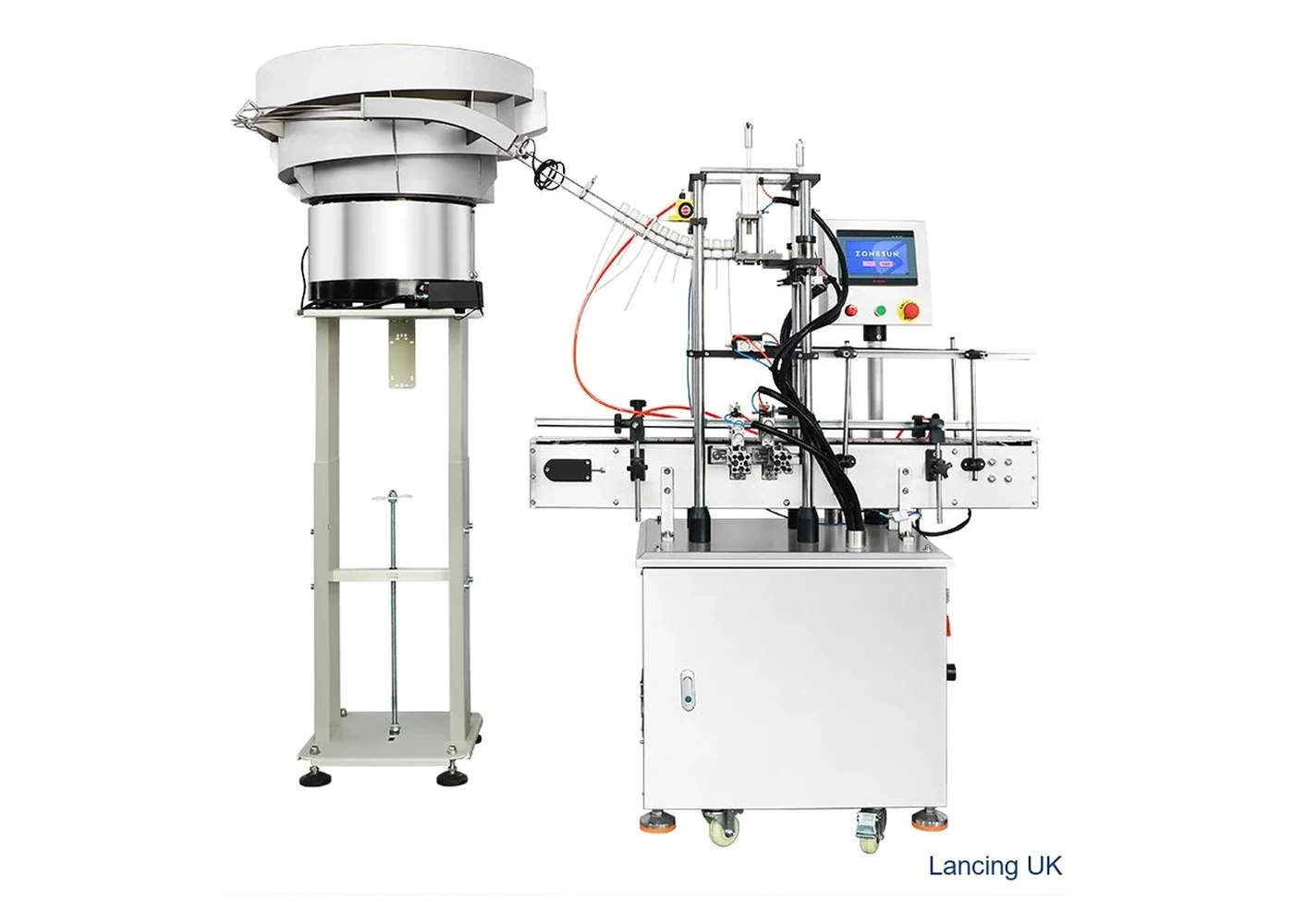
Desktop semi-automatic capper with automatic bottle clamping for low to medium volume screw-cap work.
View machine →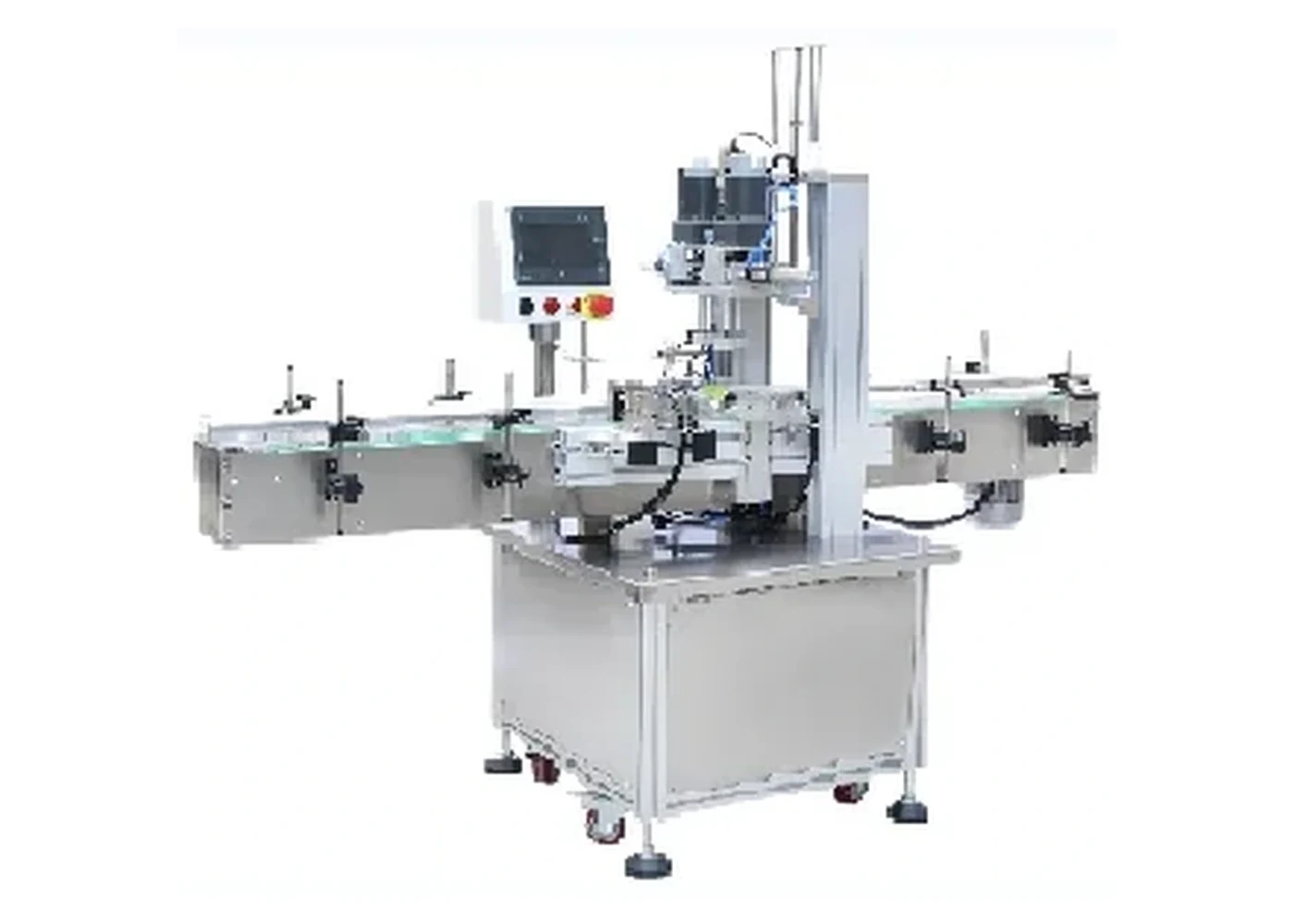
Space-saving screw capper for sprays, pumps and standard screw caps on compact production benches.
View machine →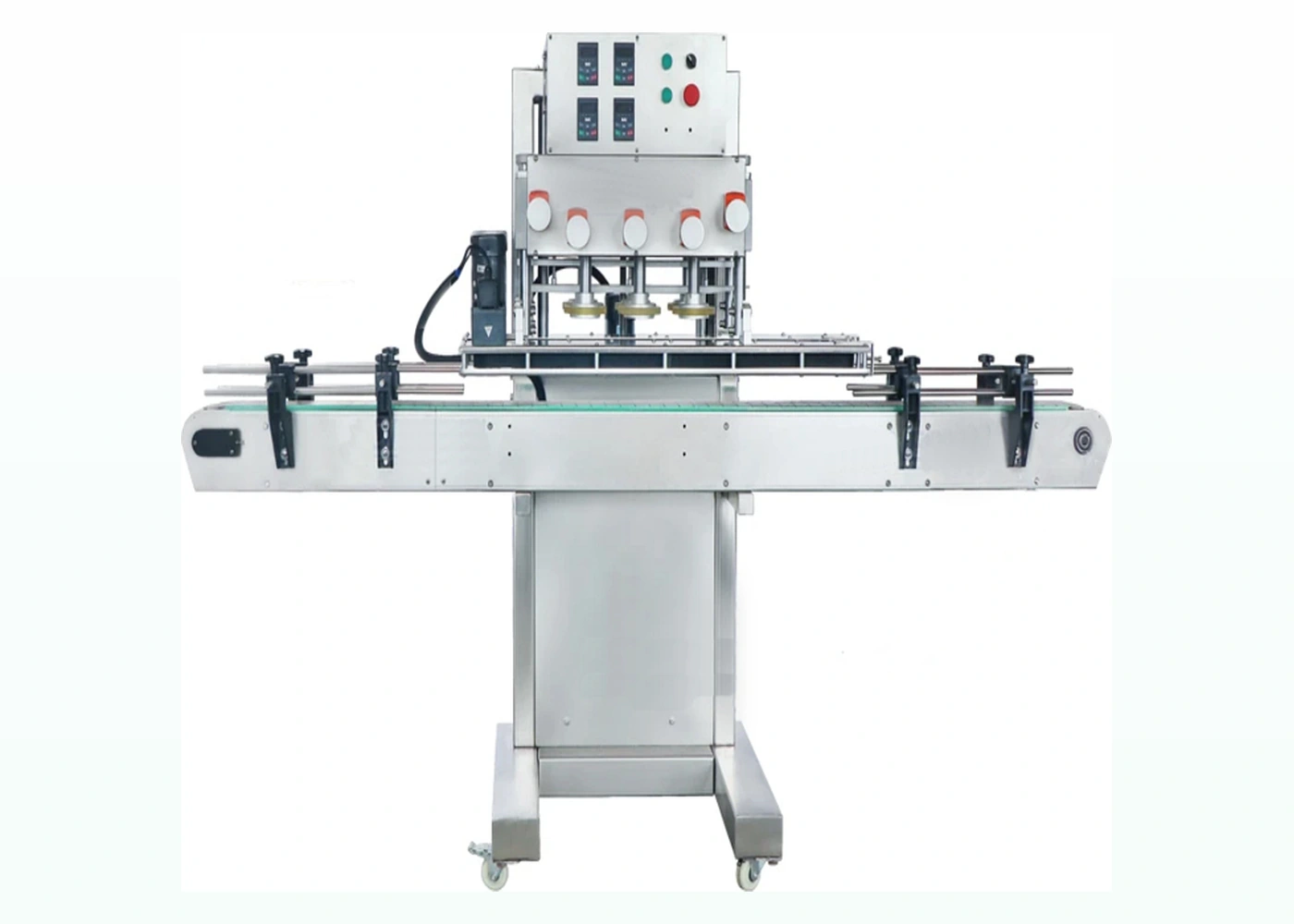
Higher-speed inline belt capper for round plastic bottles and production screw-cap lines.
View machine →Line-ready support
Screw capping projects are defined by cap type, thread engagement, bottle stability, closure feed and torque repeatability. Lancing UK can help compare the simplest bench option through to fully automatic capping with upstream filling and downstream labelling.
Why buyers use this site
Use the pages below to compare automation level, production application and the information needed for a useful quotation.
Compare semi automatic screw cappers, compact systems and automatic spindle/belt machines without mixing unrelated closure technologies.
Cap presentation can control the final speed and day-to-day reliability. We help check whether manual placement, bowl feeding or elevator feeding is best.
Installation, commissioning, operator handover, servicing and spare-parts planning can be included around the machinery package.
Applications
Suitable configurations can be reviewed for cosmetics, household liquids, beverages, chemicals, oils and other bottle or jar projects.
Spray, pump and screw-cap bottles for creams, lotions, shampoos, serums and toiletries.
Cleaning products, detergents, oils and chemical packs where torque, stability and closure feeding matter.
Bottles and jars that need consistent tightening, reliable changeovers and line-ready handling.
Include cap diameter, cap type, bottle size, target output, torque expectations and whether the machine must integrate with existing filling or labelling equipment.
Quick answers
A semi-automatic or compact desktop capper is usually the simplest route where output is moderate and an operator can handle bottle and cap presentation.
Move to an automatic capper when output, consistency or operator time makes manual cap placement a bottleneck.
Often yes, but it depends on cap diameter, cap height, thread style, liner, bottle stability and the change parts required.
Popular screw capper searches
These pages target the main buying routes customers use when comparing screw cappers by pack type, closure and automation level.
For plastic or glass bottles, jars and threaded closures where consistent torque matters.
For pumps, trigger sprays, spray caps and taller threaded closures.
Understand cap tightening, torque range, samples and trial requirements.
Compare manual cap placement, cap elevators, chutes and bowl feeders.
For toiletries, lotions, shampoos, creams, sprays and pump packs.
For detergents, oils, lubricants, cleaning liquids and chemical bottles.
Specification evidence
A reliable recommendation comes from the production pack, the required finished closure and the way operators or feeders present caps. Machine type follows that evidence rather than the search term alone.
Record cap diameter and height, external ribs or smooth surfaces, liner type, thread form, tamper feature and the intended thread start. A chuck, capping head or spindle disc must grip without distorting or marking the closure.
Bottle height, width, rigidity, neck support, centre of gravity and filled weight affect clamping and conveyor stability. Tall, light or flexible packs may require side support before a consistent torque result is possible.
“Cap fitted” is not a complete test. Agree the torque window or opening requirement, final cap height, liner compression, thread engagement, leakage or closure-integrity checks and any appearance standard before the trial.
Use a timed run with representative components and the intended staffing method. Include cap replenishment, minor stops, bottle spacing and downstream constraints so the result reflects production rather than an isolated cycle.
Technology comparison
Use this comparison to narrow the route, then confirm it with real bottle and cap samples.
| Route | How caps are handled | Where it fits | Main validation point |
|---|---|---|---|
| Handheld or bench chuck capper | An operator places the closure and presents the pack. | Trials, short batches and frequent format changes. | Chuck grip, bottle restraint and repeatable operator cycle. |
| Semi-automatic single-head capper | The operator places the cap; the machine clamps and tightens. | Growing production that needs controlled tightening without a full line. | Neck support, cap start and sustained operator workflow. |
| Automatic single-head system | Bottles index or pass inline; caps may be placed manually or fed automatically. | Regular production with a defined bottle and closure family. | Cap presentation, bottle spacing, sensors and recovery from minor stops. |
| Inline belt or spindle screw capper | Side belts stabilise the bottle while successive spindle contacts tighten a pre-placed cap. | Continuous, higher-output lines with repeatable round or stable containers. | Cap consistency, side-belt control, spindle contact and upstream cap feed. |
Enquiry brief
Send production components rather than a single perfect sample. Include the bottle format that is least stable, the cap batch most likely to vary and the liner or tamper feature that must remain undamaged. Explain whether caps are manually placed, supplied loose for automatic feeding or transferred from another process.
State required bottles per minute or hour, normal batch length, changeover frequency, available power and air, conveyor height and the equipment immediately before and after capping. Where quality already measures application torque, removal torque, cap height, leakage or opening feel, include the current method and acceptable result. This creates a practical test plan and makes quotations easier to compare.
Machine videos can help explain motion and access, but footage does not prove compatibility with a different pack. The final route should be based on sample testing and the agreed acceptance method. send the bottle and cap details for a project review.
Technical FAQ
A useful trial should show clean thread engagement, an agreed finished cap position, repeatable tightening, stable bottle handling and an output that can be sustained with the intended cap-placement method.
No. Published output is a screening figure. Bottle stability, cap consistency, operator tasks, cap replenishment, changeovers and adjoining equipment determine the practical production rate.
The bottle neck, shoulder, rigidity and filled weight change how the pack must be held. The chuck or spindle contact also has to suit the cap height, outer profile and surface finish.
Automatic feeding becomes relevant when manual placement cannot support the target output or consistent orientation. The exact cap must be tested because nesting, tangling and surface marking can affect the feeder route.
The acceptance method should be agreed for the pack. It may include application or removal torque, cap height, visual thread engagement, liner condition, leakage checks and an agreed timed production run.
Provide representative empty and filled bottles, production caps, drawings where available, target output, batch sizes, utilities, line photographs and the checks used to accept a correctly closed pack.
From enquiry to accepted production
Use these technical resources to define the production duty, submit representative samples, diagnose closure faults and agree the acceptance route before the machine enters routine production.
Define pack formats, cap presentation, output, interfaces, utilities and testable acceptance criteria.
Prepare production components, accepted references and the information needed for a meaningful trial.
Compare good-pack output, operator work, cap feeding, replenishment and line balance.
Diagnose cross-threading, high caps, loose caps, marking, bottle movement and feed faults methodically.
Plan witnessed testing, run evidence, line interfaces, deviations and handover records.
Control tooling, settings, first-off packs and restart checks for each bottle-and-cap format.
Include the bottle and closure family, required good-pack output, cap placement method, line layout, utilities and the checks used to accept a correctly closed pack.
Question-led guidance
These answers clarify the handover between the bottle, closure, machine and production method.
Cap placement puts the closure onto the bottle in the correct attitude and thread-start position; tightening then applies the controlled rotational contact needed to seat it. A machine may tighten operator-placed caps, or an automatic system may also orient and place caps through a feeder and handover mechanism.
They may be, but the cap surface and accepted appearance must be included in tooling and trial approval. Smooth, coated, printed or soft-finish caps can react differently to chucks or spindle contacts. Send normal production caps and agree the visual acceptance standard before the tooling is finalised. Closure construction and liner details should be controlled at the same time.
Common difficulties include flexible walls, an unstable base, high centre of gravity, a neck that is hard to support, inconsistent thread position or limited clearance around the closure. Filled weight and line transfer also matter. The bottle-support guide explains how these factors are tested.
Keep the approved bottle and cap references, tooling and guide settings, cap-height or torque method, accepted first-off packs, timed-run results, changeover record and any agreed restart checks. That evidence helps operators reproduce the accepted format and separates later component variation from machine-setting changes.
Send representative samples, target output and the current acceptance method so Lancing can review the correct capping route.
Complete project evidence
The tightening method is only one part of a production-ready capping cell. Quality inspection, safe access and cleaning duties can change the line layout, controls and acceptance plan.
Define missing, high, tilted, wrong or damaged caps, then prove bottle tracking, reject confirmation and recovery after a stop. Visual inspection does not replace the agreed torque or leakage method.
Review the capper, conveyor, side belts, feeder, reject device and intervention tasks as one installed system. Guarding, isolation and line-stop behaviour must fit the site risk assessment.
Map product and pack-contact zones, approved cleaning methods, removable change parts and first-off checks. Stainless components alone do not prove washdown suitability.
Decision record
A strong capping brief should identify the pack, process, quality checks and site interfaces before quotations are compared.
| Decision | Evidence to provide | Why it affects the machine |
|---|---|---|
| Finished closure | Accepted packs, cap height or level, thread engagement, liner or tamper condition and any torque or leak method. | Defines the capping contact, setting method and inspection plan. |
| Production pack | Empty and filled bottles, cap batches, drawings, dimensions, surface finish and the least stable format. | Determines bottle support, guides, chuck or spindle contact and trial scope. |
| Workflow | Manual or automatic cap placement, staffing, batch length, replenishment and changeover frequency. | Separates a fast isolated cycle from sustainable good-pack output. |
| Installed line | Conveyor height and direction, utilities, signals, guarding boundary, inspection point, reject route and access. | Controls integration, footprint, commissioning and site acceptance. |
Lancing can review the machine route, sample plan, safety boundary and quality evidence together before the capping system is fixed.
Closure-system evidence
Machine speed and cap diameter are only screening information. The final route also depends on the bottle-and-closure interface, the way torque is measured and any downstream foil-sealing requirement.
Confirm drawings, thread engagement, sealing land, liner or tamper features and normal component variation before tooling is fixed.
Choose the correct instrument range and fixture, then control timing, units, operator technique and calibration status.
Plan cap application, liner contact, conveyor hand-off, sealer operating window and finished-pack acceptance as one process.
Include current bottle and closure drawings, representative samples, filled weight, target good-pack output, current torque method and downstream sealing or inspection steps.
Buyer decision support
A closure project needs more than a target tightening setting. Separate the machine’s control method, the opening result after storage and any proposed additional tightening stage so the quotation addresses the real production task.
Understand mechanical or magnetic limits, servo-driven heads and spindle contact. Ask which features are actually supplied rather than inferring them from an automation label.
Plan identified, unopened samples and defined test conditions. Keep later opening results separate from the original application setting.
Distinguish a planned second process stage from the recovery of rejected packs. Define eligibility and release evidence before specifying machinery.
For a useful Lancing enquiry, include the bottle-and-cap references, liner, original application method, accepted opening behaviour and any complaint or rework history. Child-resistant and tamper-evident formats also need the closure supplier’s functional requirements; increasing tightness is not a substitute for those checks.
Use the same bottle and closure samples and define the required closing result. Compare operator loading, cap presentation, bottle restraint and tightening as one cycle. Include format changes and routine checks, then assess accepted closed bottles and staffing needs at the planned production volume.
Related guidance:
A screw capper should be compared against an identified bottle-and-closure combination. Provide the neck and cap references, an approved closed pack and loose production samples. State how the cap is presented before tightening and describe the finished-pack checks already used by your production team. This makes the enquiry more precise than a cap diameter and target speed alone.
For a compact or semi-automatic project, show the operator sequence from picking up the bottle to placing the finished pack down. For an inline project, show the transfer from filling, the cap supply arrangement and the next machine after capping. Ask which parts of that sequence are included in the proposed equipment and which remain manual.
Keep the formats with pumps, trigger sprayers or other projecting features separate from ordinary screw caps in your sample list. Identify the surfaces that may be gripped and any final orientation requirement. A general screw-capping description should not be taken as confirmation that every closure in the range shares the same setup.
Assess it against the complete operator task and the production requirement. Ask for a trial with the actual packs and a clear description of future interfaces or limitations before assuming the same machine can later become a fully automatic line.