Label formats clearly
Use a unique format name or code on the outer packaging and sample register. Keep bottles, caps, liners and accepted references linked to the same format.
Sample trial guide
Representative samples allow bottle stability, cap presentation, tooling contact, thread engagement and the finished closure result to be checked before the machine and change parts are finalised.
Practical starting point
Samples should represent normal supply quality and the formats that are hardest to handle. The quantity and shipping method should be agreed with Lancing so there is enough material for setup, adjustment, a timed run and retained references.
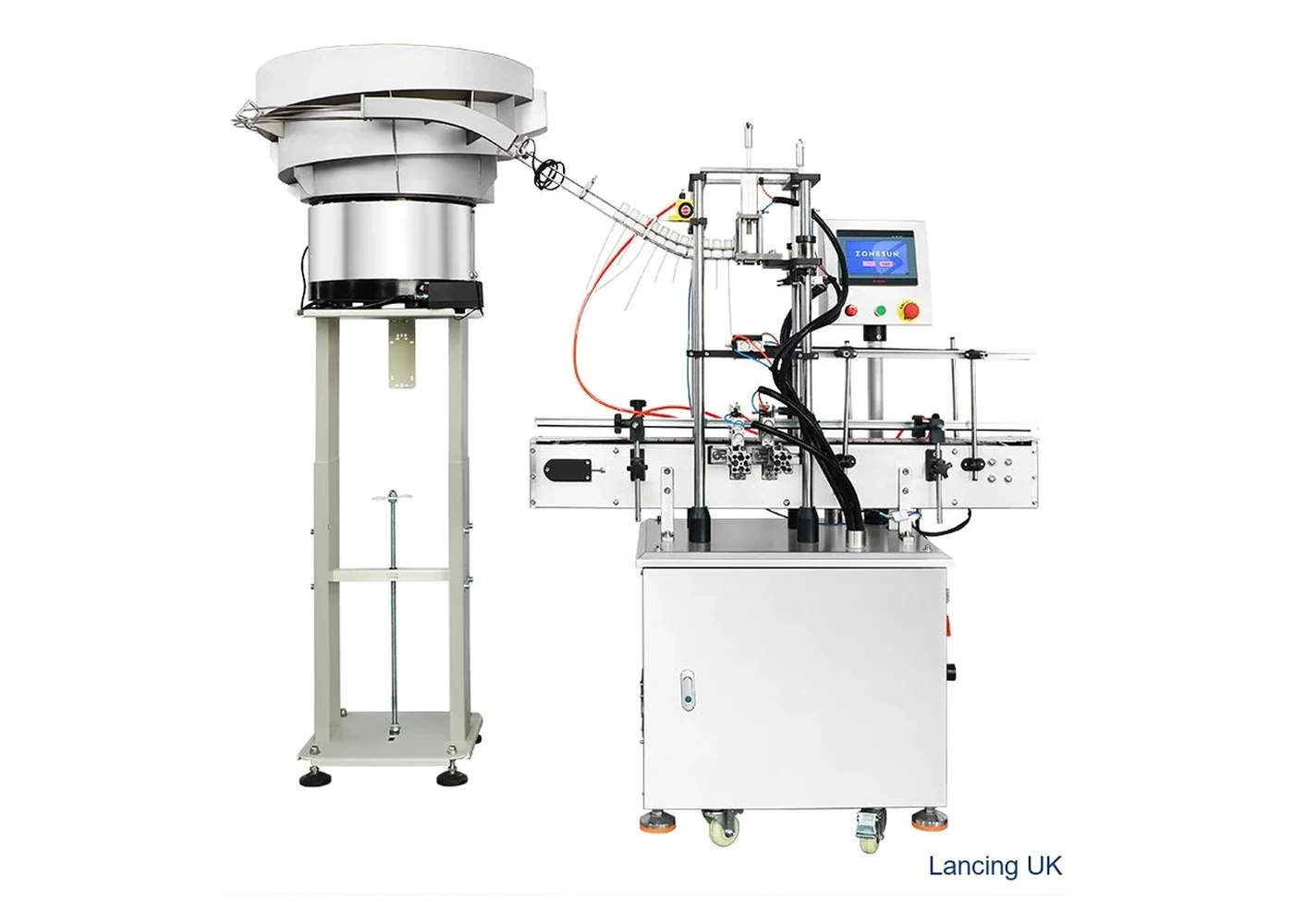
Sample register
| Sample item | What to provide | What the trial checks |
|---|---|---|
| Bottles or containers | Production components covering height, diameter, shape, neck position, wall stiffness and filled-weight extremes. | Guiding, clamping, side-belt support, head clearance, stability and conveyor transfer. |
| Screw closures | Normal caps with the correct liner, wad, tamper feature, finish and supplier batch identity. | Orientation, handover, thread start, tooling/spindle contact, marking and release. |
| Pumps or triggers | Complete closure including actuator, collar and dip tube in production condition. | Tube control, orientation, clearance, cap engagement and protection of the actuator. |
| Accepted finished packs | Examples approved for cap height, opening, appearance, liner/tamper condition and leakage where relevant. | A practical reference for the machine-trial result. |
| Known rejected packs | Clearly identified examples of cross-threading, high caps, scuffing, loose/over-tight closure or bottle damage. | Defines the rejection boundary and helps reproduce the failure mode. |
| Drawings and data | Available bottle/neck and closure drawings, target checks, current process, target output and line layout. | Reduces assumptions and supports tooling and interface review. |
Preparation
Use a unique format name or code on the outer packaging and sample register. Keep bottles, caps, liners and accepted references linked to the same format.
Pack bottles and closures so deformation, contamination or scuffing during transport is not mistaken for normal production condition.
Agree before shipping whether real product is necessary. Where product properties affect material compatibility or safe handling, provide the relevant information and follow the agreed transport route.
Do not hand-select only perfect components. The trial should see the realistic variation that the production process must handle.
Explain how cap height, thread engagement, opening/removal, liner or tamper condition, leakage and appearance are checked.
Keep accepted and rejected trial packs identified with the settings and component batch so the approved result can be compared later.
Trial brief
A trial may be intended to select a machine route, approve a chuck or insert, prove cap feeding, establish format settings, compare automation levels or witness an acceptance run. Identify the decision so the test does not become an unstructured demonstration.
Link the samples to the URS, capacity plan, defect record and acceptance plan.
Buyer questions
Lancing should confirm the sample quantity and shipping arrangements for the specific trial before components are sent.
The required quantity depends on setup, format range, cap feeding, timed runs and whether references must be retained. Agree the quantity with Lancing for the specific test rather than using a universal number.
Sometimes, but filled weight or product condition can change stability, grip and contamination around the neck. The correct test condition should be agreed for the application.
Where normal batch variation may affect threads, liners, cap finish or bottle stiffness, samples from more than one production batch can improve the trial evidence.
Photographs and drawings help initial screening, but physical samples are normally needed to prove cap start, tooling contact, bottle control and the finished closure result.
Do not dispatch it without agreement. Provide the relevant product and handling information so Lancing can confirm whether a safe substitute, test weight or controlled trial arrangement is appropriate.
Share photographs, dimensions, format list, product condition and the decision the trial must support so Lancing can confirm what to send.
Representative variation
One ideal bottle and cap can prove physical access but not reliable production. Where possible, include different mould cavities or supplier lots, the lightest or least stable bottle, normal liner variants and product-equivalent filled samples.
| Sample group | Reason to include it |
|---|---|
| Approved good pack | Defines the finished cap position, opening evidence, liner or tamper condition and appearance. |
| Multiple bottle samples | Shows variation in neck finish, height, body stiffness, base stability and guide contact. |
| Multiple closure samples | Shows variation in thread, grip ribs, liner placement, cap height and tamper bridges. |
| Filled production condition | Represents normal weight, stiffness, friction, temperature and potential neck contamination. |
| Known failed examples | Helps define cross-threading, high caps, marking, leakage or other defects that must be detected. |