Bench or semi-automatic chuck capper
Useful where flexibility, low batch volume and manual cap placement are acceptable. Capacity depends heavily on operator handling and the time needed to locate and remove each pack.
Production planning
Capacity should be based on accepted finished packs produced through a realistic operating period, not the fastest isolated capping cycle. The correct automation level depends on cap presentation, bottle handling, operator work and connected-line constraints.
Practical starting point
A machine can cycle quickly while the cell underperforms because caps are placed manually, bottles are unstable, the feeder needs frequent attention or downstream equipment cannot accept the flow.
Capacity model
| Input | Question to answer | Why it changes capacity |
|---|---|---|
| Required good packs | How many accepted packs are needed in the available production time? | Rejects and rework do not satisfy the finished-output requirement. |
| Cap presentation | Are caps placed by hand, pre-placed upstream or automatically fed and oriented? | Manual placement or a difficult feed can set the practical pace. |
| Operator work | Who loads, unloads, inspects, replenishes and clears minor stops? | One operator may not sustain every concurrent task at the target rate. |
| Pack stability | Which bottle tips, spins, deforms or needs the most support? | Handling and settling time may be more important than head speed. |
| Changeovers | How many formats are run and how often are tooling, guides and settings changed? | Frequent short batches can favour a flexible route over maximum continuous rate. |
| Line balance | Can filling, coding, labelling, inspection and packing accept the same flow? | Accumulation or a downstream constraint can stop the capper. |
| Normal losses | What stops, cap refills, rejects, cleaning and planned checks occur? | Sustainable capacity includes the events that occur in real production. |
Automation routes
Useful where flexibility, low batch volume and manual cap placement are acceptable. Capacity depends heavily on operator handling and the time needed to locate and remove each pack.
Useful where indexed bottle control, repeatable head action and optional cap feeding reduce operator handling. The handover sequence and format changes should be proven with samples.
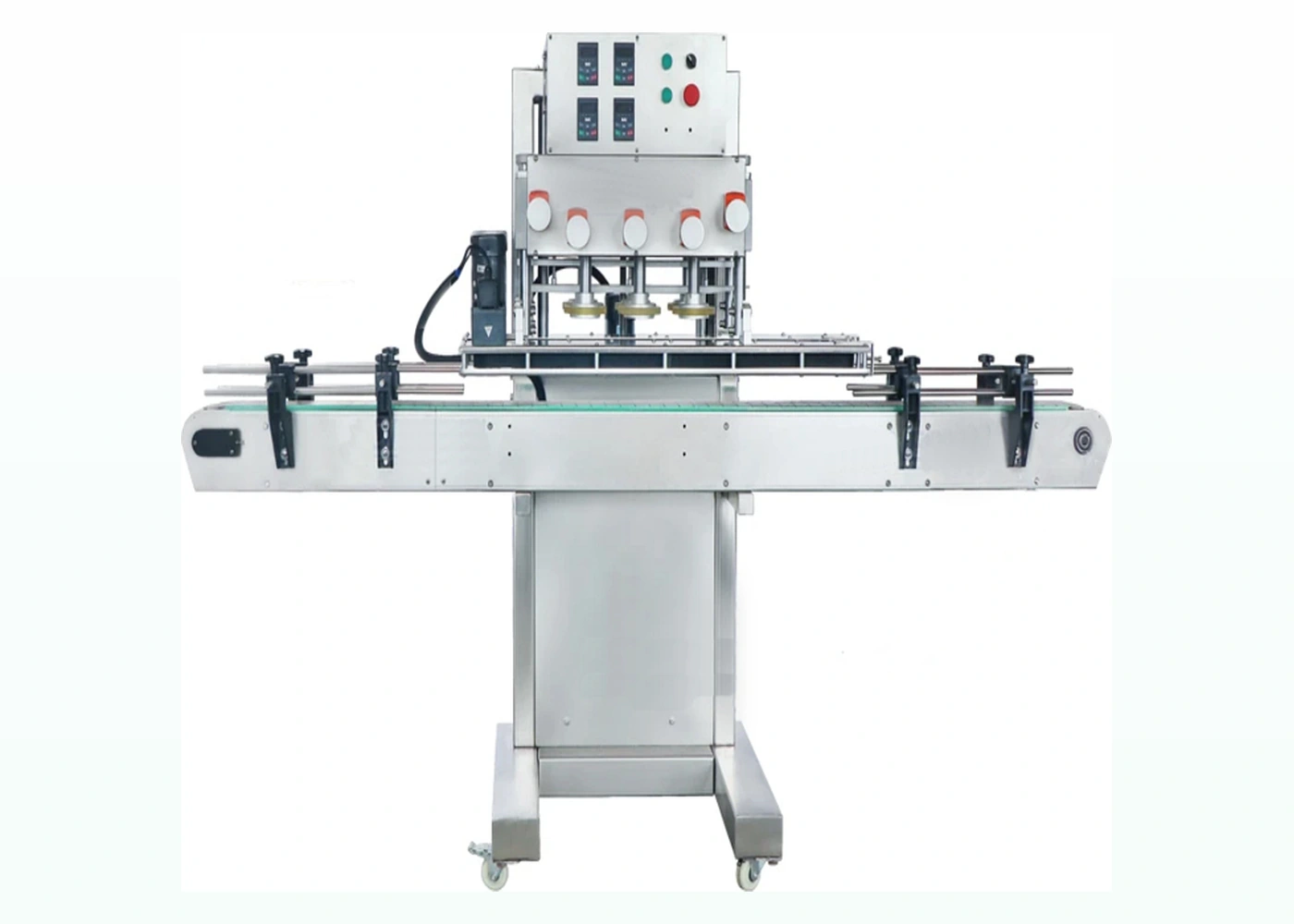
Useful where caps can be placed consistently and bottles can remain stable through side belts and spindle contact. Line balance and cap-feed continuity become central.
Timed trial
Record starting quantities, accepted packs, rejects, rework, interventions, cap replenishment, stop time and operator tasks. Repeat after the line has reached normal running condition and include a stop/restart. The result is useful only when the pack, settings and method are identified.
Use the sample-submission guide to prepare components and the FAT/SAT guide to define the witnessed acceptance run.
Buyer questions
Capacity is format- and workflow-dependent, so the same machine can produce different sustainable results on different packs.
No. It is a useful screening value, but sustainable output also depends on cap presentation, bottle handling, operator work, rejects, changeovers and the equipment before and after the capper.
Measure the full operator cycle and the required replenishment or recovery work. Automatic feeding is valuable only when the exact cap can be oriented and handed over reliably.
Include the format most likely to constrain production, such as the least stable bottle, most difficult cap or pack with the most demanding presentation and acceptance checks.
Report good packs separately from rejects and rework. Record the reject reason so a handling or component problem is not hidden inside an average output figure.
Only if capping is the verified bottleneck and the connected line can accept the higher flow. Line balance and accumulation should be reviewed before increasing machine speed.
Send the target good-pack output, batch pattern, operator workflow, bottle and closure samples, and connected-line information for a practical capacity review.