1
Confirm the pack
Identify the bottle, closure, liner, batch and filled condition. Compare the defect with an accepted finished pack and inspect the neck and cap before rerunning it.
Troubleshooting guide
Use the finished-pack defect to narrow the cause before changing torque, speed or tooling. This guide separates thread-start, bottle-control, cap-feed and tightening problems so a trial can be corrected methodically.
Practical starting point
A cap can feel tight and still be incorrectly seated. Record what is visible, when the defect appears and whether it follows one bottle, cap batch, tooling set, operator action or point in the run.
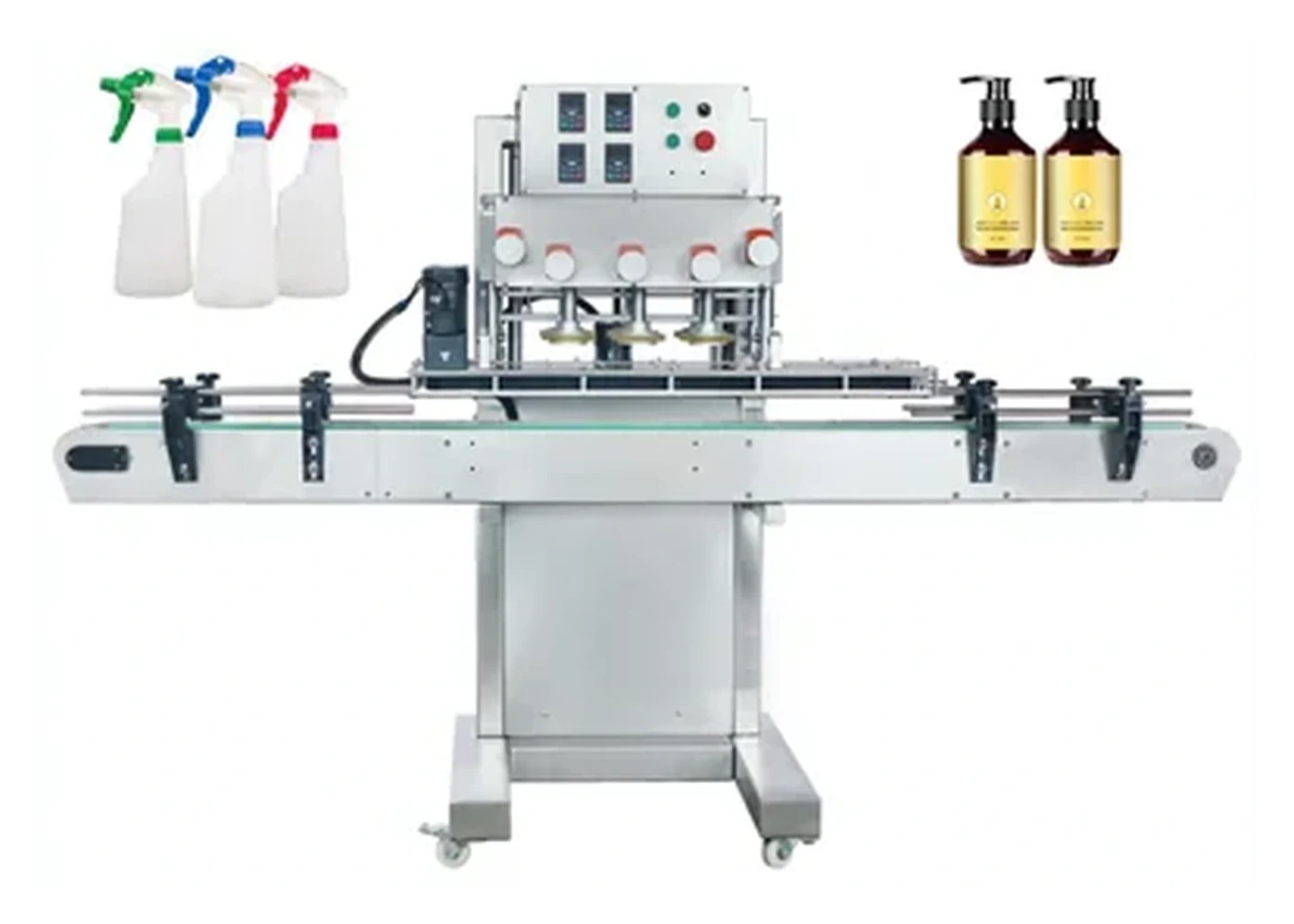
Defect matrix
The table is a diagnostic starting point, not a substitute for a component trial. More than one cause may be present.
| Observed defect | Checks to make first | Evidence to retain |
|---|---|---|
| Cross-threaded or tilted cap | Cap angle before tightening, bottle squareness, thread start, cap handover, head alignment and excessive engagement speed. | Side-view photographs, cap-height comparison, slow observation of the start and the affected bottle/cap batch. |
| Cap sits high | Partial thread engagement, liner or wad position, obstruction on the neck finish, head stroke/height and cap-to-neck compatibility. | Accepted reference pack, measured cap position, removed-cap inspection and neck-finish condition. |
| Loose or inconsistent opening | Tool slip, contact time, bottle movement, cap-surface contamination, liner compression and variation between component batches. | Application setup, timed removal method, bottle/cap identity and results across the run rather than a single pack. |
| Over-tight or bottle distorted | Head setting, spindle pressure, dwell, bottle clamp or side-belt pressure, wall stiffness and filled weight. | Before/after bottle profile, opening check, setting record and evidence from the least rigid format. |
| Cap scuffed, polished or cut | Chuck/insert profile, spindle contact material, contact pressure, cap finish and release from the tool. | Images under normal presentation lighting and the exact tool or insert used. |
| Bottle spins, lifts or tips | Base stability, neck support, clamp timing, side-belt grip, guide position, fill weight and conveyor transition. | Video of the full cycle, guide/clamp settings and the unstable format at normal line pace. |
| Intermittent no-cap or poor placement | Feeder orientation, chute back pressure, cap sensor, escapement, handover timing and recovery after replenishment. | Stop reason, cap orientation at the handover, sensor state and restart sequence. |
Controlled diagnosis
Identify the bottle, closure, liner, batch and filled condition. Compare the defect with an accepted finished pack and inspect the neck and cap before rerunning it.
Watch how the closure is presented, located and started on the thread. A poor start cannot be corrected reliably by increasing final tightening force.
Check guides, clamps, side belts and neck support. Confirm they hold the pack without crushing, polishing or changing its shape.
Confirm the chuck, insert, head or spindle contacts the intended cap surface and releases without lifting the bottle or actuator.
Adjust one controlled variable, identify the setting and repeat the same acceptance checks. Avoid making several changes that cannot be traced.
Repeat the accepted setup through normal replenishment, stopping, restarting and the expected production period. Record rejects and interventions.
Escalation boundary
If the same bottle and cap cannot start cleanly by hand, if neck finishes vary materially, if liners are displaced or if caps arrive distorted, the component issue should be resolved or formally accepted before a machine setting is approved.
For repeatable components, use a controlled sample trial to decide whether a semi-automatic chuck capper, automatic single-head capper or belt/spindle capper provides the required control.
Buyer questions
These answers help define the next diagnostic step without assuming a universal machine setting.
Torque is measured after contact has developed. A cap that starts at an angle may still produce a reading, so thread start, cap height and visual engagement should be checked before accepting the pack.
Not automatically. First check tool slip, bottle movement, liner condition, cap placement, measurement timing and component variation. Increasing force can hide the original cause or damage the pack.
Marking can result from an unsuitable chuck or insert profile, excessive contact pressure, abrasive contamination, spindle material or poor release. The exact closure finish should be assessed during a sample trial.
Retain the affected pack and record when it occurred, including cap replenishment, stop/restart history, component batch and machine settings. Repeat the same operating event during the trial.
If the closure is not a threaded screw closure, or if the pack depends on a different closing principle, a specialist capping route may be required. Confirm the closure specification before selecting equipment.
Lancing can review the bottle, closure, defect pattern and production duty before recommending a tooling, handling or machine route.
Fault evidence
Inspection data is most useful when it separates cap presentation, bottle support, tightening and downstream handling rather than recording only a final reject total.
| Recurring defect | Useful process evidence | Possible control point |
|---|---|---|
| Missing cap | Cap feeder queue, chute handover, no-cap sensor and bottle position. | Before tightening and after the capper. |
| High or tilted cap | Thread-start image, bottle support, cap-height profile and component dimensions. | After cap placement and after tightening. |
| Loose cap | Tool contact, setting, cap/bottle variation, immediate and conditioned removal evidence. | At the capper plus sampled pack testing. |
| Marked cap | Chuck or spindle contact, contamination, wear, finish batch and release behaviour. | Immediately after tightening under controlled lighting. |
| Intermittent reject | Time, line state, stop/restart, component batch and upstream/downstream accumulation. | Across the full sequence, not only at final inspection. |