C
Cosmetics & personal care
Spray bottles, pump bottles, creams, lotions, serums, shampoos and toiletries with presentation-led packaging.
Applications
Use this page to match screw capping equipment to bottle style, cap presentation, product sector and line layout.
Spray bottles, pump bottles, creams, lotions, serums, shampoos and toiletries with presentation-led packaging.
Detergents, cleaning liquids and trigger or pump packs where dip-tube control and cap feeding can matter.
Bottles and jars for sauces, drinks, condiments and nutrition where stable torque and hygiene are important.
Oil and chemical bottles that need consistent closure application and integration with filling equipment.
Supplements, medical-style bottles and nutrition products where repeatability and documentation matter.
Projects that require filling, capping, labelling, conveyors and inspection to work as one production route.
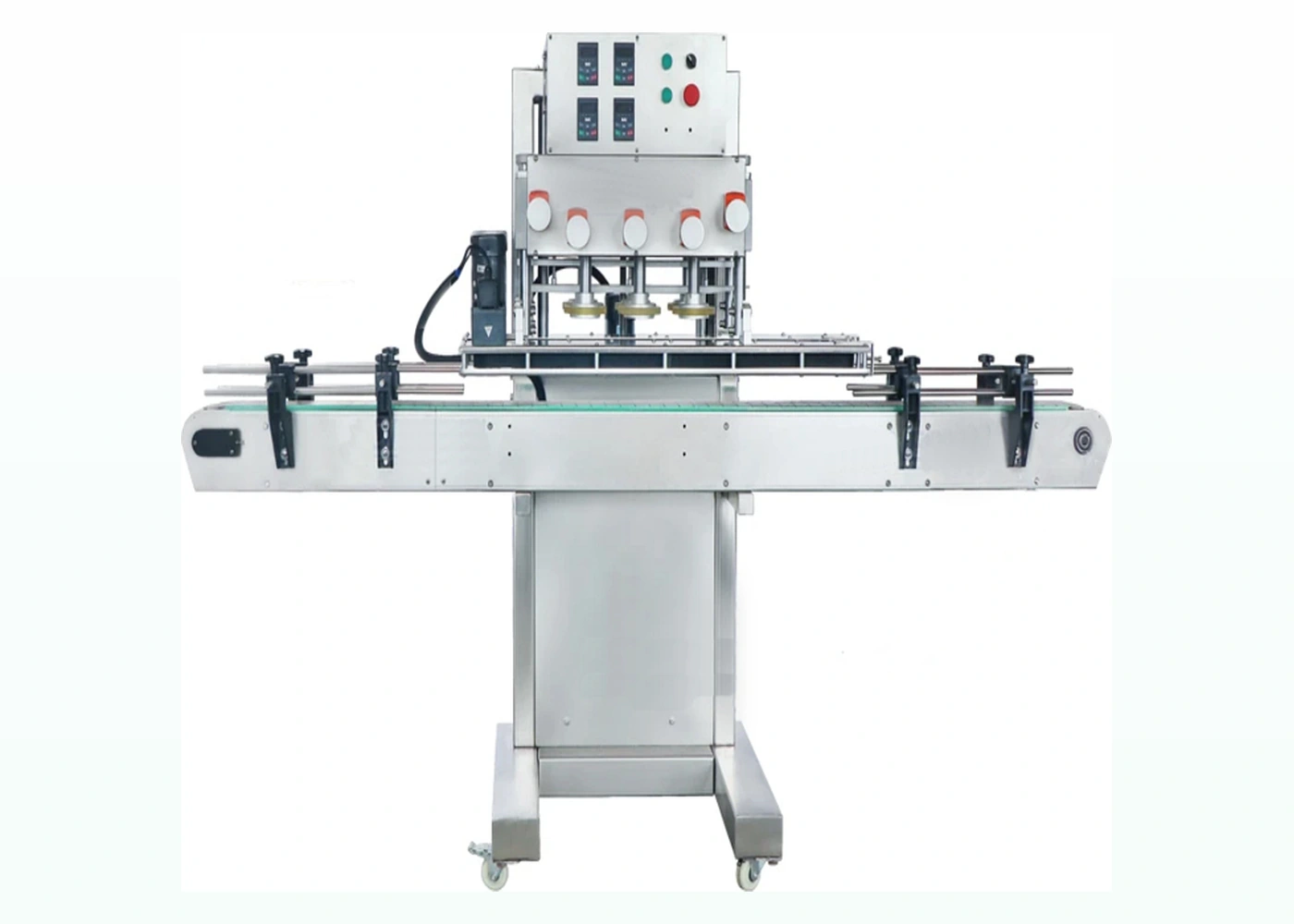
What to check
The same cap diameter can behave differently across bottles, materials, liners and products. Good shortlisting should validate bottle stability, torque requirement, cap feed orientation and downstream presentation.
Send your bottle and cap photos with target speed and we will recommend a route.
Applications
For bottles and jars with threaded closures.
For household, cosmetic and chemical spray bottles.
For personal care, toiletries and presentation-sensitive packs.
For detergents, lubricants and household chemicals.
Pack evidence
Food, beverage, cosmetic and chemical packs can use similar threaded caps while requiring different checks for liners, leakage, presentation, opening force and bottle support.
Confirm whether the closure uses a liner, wad or sealing feature and how the bottle neck finish supports it. Excessive or uneven compression can change removal behaviour and closure integrity.
A cap can appear tight while sitting high or engaging the wrong thread start. Record the accepted finished position and inspect for cross-threading, cocking and partial engagement.
Flexible walls, tall shoulders, light containers and offset necks can move during tightening. Fixtures, side belts or neck support should hold the pack without crushing or scuffing it.
Ribbed, smooth, soft-touch and decorative caps need different contact materials and pressure. Tooling should transmit torque without cosmetic marking or slippage.
Filled weight and product contamination around the neck can alter stability and grip. Trial packs should represent normal production condition, not only clean empty samples.
Agree the relevant checks: torque, cap height, thread engagement, liner condition, leakage, tamper-feature condition, opening feel and sustained line output.
Intent ownership
Screwcappers.co.uk remains focused on threaded screw-cap tightening and application. Use Bottle Cappers UK when the project needs a broader comparison of bottle closure technologies, Jar Capping Machines UK for jar lids and twist-off or vacuum routes, and Cap Feeders UK when sorting, orientation and automatic presentation are the main constraint.
For a threaded bottle or pump closure, start with the bottle screw capping application or pump and trigger application. Short batches can be screened through the small-batch route; higher-output continuous lines can use the spindle-capping route.
Whatever the sector, the useful quotation evidence is the same: production components, target output, accepted finished-pack checks, cap-placement method, line layout and representative difficult formats. Send those details to Lancing before fixing the machine model.
Application proof
The application name alone does not select the capper. The same threaded closure can behave differently when bottle stiffness, filled weight, neck contamination, liner condition, presentation finish or line handling changes.
State whether trials use empty bottles, water, test weight or product-filled packs, and identify any product property that changes safe handling, grip or neck cleanliness.
Use cap height, thread engagement, opening/removal check, liner or tamper condition, leakage and presentation criteria appropriate to the finished pack.
Record how bottles arrive, how caps are presented, where accumulation occurs and what the capper must do when upstream or downstream equipment stops.
Application evidence
The same bottle and cap can behave differently when filled, contaminated, cleaned or run through a different line layout. Confirm these conditions before machine selection.
Define spill risk, closure and liner condition, cleaning method, pack-specific leakage checks and any hygiene boundary around open or overfilled bottles.
Include decorative cap finish, pump or spray orientation, product residue, dip-tube handling and the accepted appearance after tightening.
Use the product safety information, material compatibility, operator exposure controls and site assessment rather than assuming a general-purpose setup is suitable.
Control component identity, frequent changeovers, cleaning boundaries, retained settings and first-off approval across several customer formats.
Separate product, pack and non-contact zones and verify the accepted format after cleaning.
Define visible defects and the reject sequence for the production line.
Review guarding, access, isolation and training for the installed application.
Application dependencies
Food, beverage, cosmetic, chemical and contract-packing projects can use similar screw caps but require different evidence around contamination, bottle stability, liner behaviour, component variation and downstream sealing.
Confirm that the real bottle, cap, liner and tamper features form an approved pack before machine settings are discussed.
Useful where a foil liner follows screw capping and cap application affects liner contact and final seal evidence.
Define the instrument, timing and sample condition needed by production and quality teams for each pack family.
Buyer decision support
A threaded pump, flip-top, child-resistant closure or tamper-evident cap adds a second decision beyond tightening. State how the finished pack is meant to open, dispense, reclose or show its original opening condition.
Identify the supplier’s closing and opening mechanism and the approved bottle combination. A capper cycle or a torque reading is not certification of child resistance.
Separate correct cap seating from intact bridges, band position and the specified first-opening event. Keep suspect samples unchanged for investigation.
Specify whether the flip lid arrives open or closed, the surfaces tooling may contact and the required dispensing function after application.
Include full assemblies, not only loose outer shells, when discussing tooling and handling. State any downstream sealing stage and any test after storage. This lets the machine review consider the complete pack without assuming every specialist format uses the same grip or closing sequence.