01
Why thread engagement matters
The cap must locate correctly before tightening. If it starts at an angle or catches on the thread, the final torque reading may hide an unreliable closure.
Buyer guide
Thread engagement is one of the most important factors in screw capping. If the cap does not start cleanly on the bottle, torque control alone will not solve the problem.
Selection notes
Thread engagement is one of the most important factors in screw capping. If the cap does not start cleanly on the bottle, torque control alone will not solve the problem.
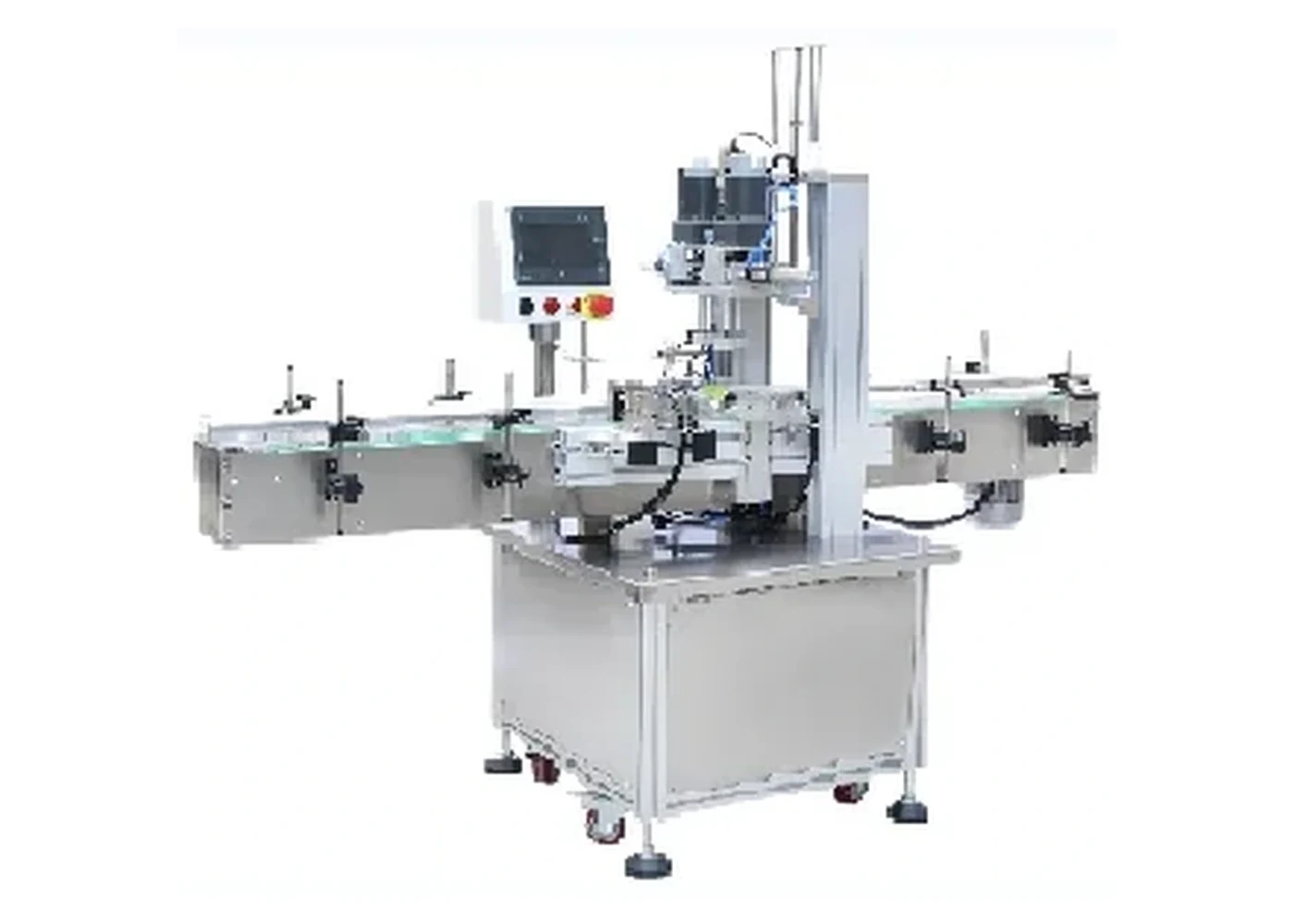
Buying detail
The cap must locate correctly before tightening. If it starts at an angle or catches on the thread, the final torque reading may hide an unreliable closure.
Variation in caps, poor neck finish, unstable bottles, operator placement and excessive line speed can all cause engagement issues.
Test with representative samples, control bottle position and choose tooling that supports clean cap start before final torque is applied.
Include cap diameter, closure type, bottle size, target output, available space and whether the capper needs to connect to filling or labelling equipment.
Related routes
Use this route to compare another part of the screw capping project and strengthen your enquiry brief.
Use this route to compare another part of the screw capping project and strengthen your enquiry brief.
Use this route to compare another part of the screw capping project and strengthen your enquiry brief.
Use this route to compare another part of the screw capping project and strengthen your enquiry brief.
Use this route to compare another part of the screw capping project and strengthen your enquiry brief.
Use this route to compare another part of the screw capping project and strengthen your enquiry brief.
FAQs
Suitability depends on cap type, bottle stability, target torque, output and whether caps are manually placed or automatically fed. Samples help confirm the correct route.
Send bottle and cap samples or drawings, cap diameter, bottle height and diameter, target output, product type, line layout and any changeover requirements.
Yes. Lancing UK can review the product, pack, closure and output requirement first, then help shortlist a practical screw capping route.
Failure diagnosis
Thread engagement begins before the capping head applies final tightening. The cap must be presented squarely, settle onto a compatible thread start and travel to the accepted final position. More force cannot correct a cap that started incorrectly.
Observe the cap immediately before contact. Check tilt, bottle movement, dip-tube interference, cap skirt distortion and whether the closure supplier's thread matches the bottle neck finish. Compare more than one production component batch where variation is suspected.
Use an approved pack or drawing to define the measurement point. Record height before and after tightening where useful, then inspect liner compression, tamper-feature position and any gap around the neck. A height result should not be used alone.
Check head height, chuck depth, spindle contact, guide position, bottle clamp or side belts and the timing of cap placement. Worn or contaminated contact parts can slip; excessive pressure can push a tilted cap onto the wrong thread.
Separate component faults from machine settings by retaining accepted and rejected packs with batch identification. If the thread geometry is incompatible or inconsistent, stop adjusting the capper and involve the bottle or closure supplier. Use the cross-threading guide and torque-test checklist to structure the investigation.
Thread FAQ
Yes. A cap can bind on the wrong thread start and produce resistance without reaching the approved height or liner condition.
Possible causes include poor placement, bottle movement, inconsistent neck or cap threads, a bent dip tube, unsuitable guides or a head that contacts the closure before it is square.
Height provides a simple check that the cap has travelled to the expected position. It should be assessed with torque, visual engagement and sealing requirements.
No. Increasing force can damage threads, liners, bottles or closures while leaving the original placement or component problem unresolved.
Keep accepted and rejected bottle-cap pairs, identify the component batches and record machine settings, line speed and where in the run the fault occurred.
Thread-start evidence
Use side-view observation, cap angle, cap height and removed-cap inspection to distinguish a clean thread start from a closure that has been forced into position.
| Observation point | Accepted condition | Possible fault to investigate |
|---|---|---|
| Cap presentation | Closure arrives square and stable at the neck finish. | Feeder orientation, hand placement, chute pressure or actuator/dip-tube interference. |
| Initial rotation | Cap locates without visible tilt, jump or bottle movement. | Thread mismatch, cap angle, head alignment, excessive start speed or poor bottle support. |
| Final position | Cap height and skirt position match the accepted reference. | Partial engagement, liner obstruction, neck contamination or incorrect head height. |
| Removal inspection | Threads and liner/tamper features remain undamaged. | Cross-threading, over-compression, component damage or unsuitable tooling contact. |