01
Manual placement strengths
Manual cap placement is often practical for small batches, multiple caps and low-volume production. It keeps the system simpler and can reduce changeover complexity.
Buyer guide
A key decision in screw capping projects is whether caps should be manually placed or automatically fed. The best option depends on output, closure type, changeover frequency and operator workload.
Selection notes
A key decision in screw capping projects is whether caps should be manually placed or automatically fed. The best option depends on output, closure type, changeover frequency and operator workload.
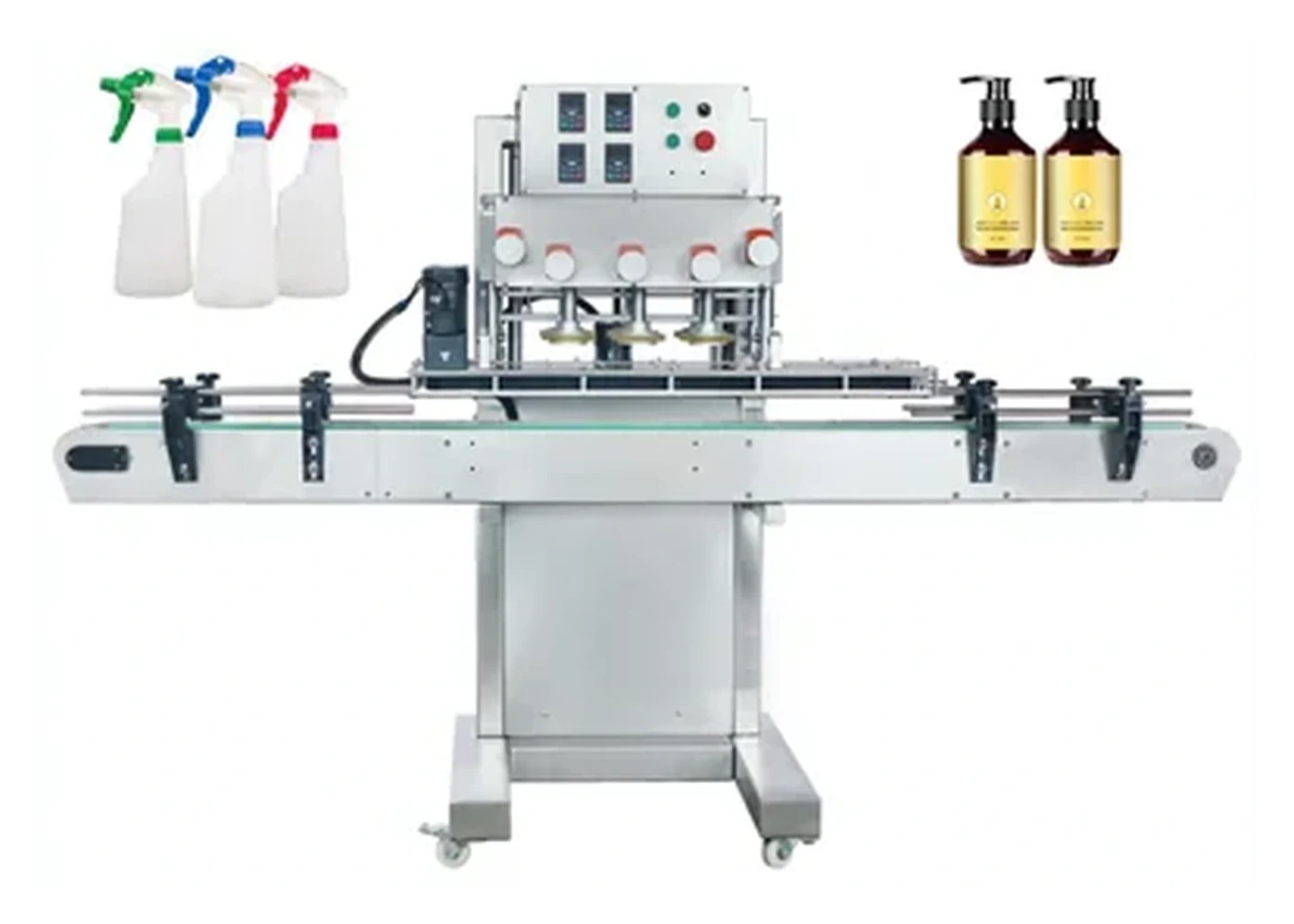
Buying detail
Manual cap placement is often practical for small batches, multiple caps and low-volume production. It keeps the system simpler and can reduce changeover complexity.
Automatic feeding helps with throughput and consistency where cap designs are repeatable and production volume justifies the equipment.
Compare total output, labour, cap complexity, batch size and changeover time. A feeder is valuable only if it reliably handles the actual closure.
Include cap diameter, closure type, bottle size, target output, available space and whether the capper needs to connect to filling or labelling equipment.
Related routes
Use this route to compare another part of the screw capping project and strengthen your enquiry brief.
Use this route to compare another part of the screw capping project and strengthen your enquiry brief.
Use this route to compare another part of the screw capping project and strengthen your enquiry brief.
Use this route to compare another part of the screw capping project and strengthen your enquiry brief.
Use this route to compare another part of the screw capping project and strengthen your enquiry brief.
Use this route to compare another part of the screw capping project and strengthen your enquiry brief.
FAQs
Suitability depends on cap type, bottle stability, target torque, output and whether caps are manually placed or automatically fed. Samples help confirm the correct route.
Send bottle and cap samples or drawings, cap diameter, bottle height and diameter, target output, product type, line layout and any changeover requirements.
Yes. Lancing UK can review the product, pack, closure and output requirement first, then help shortlist a practical screw capping route.
Cap presentation
Automatic feeding adds value only when the exact cap can be separated, oriented and handed to the bottle reliably.
| Factor | Manual placement | Automatic feeder |
|---|---|---|
| Batch and SKU pattern | Flexible for short runs and unrelated closures. | Stronger where repeatable cap families justify feeder setup. |
| Closure complexity | Operator can guide pumps, triggers and difficult tubes. | Requires proven sorting, orientation and placement without tangling or marking. |
| Output | Limited by safe, sustainable operator pace. | Can support higher output when replenishment and handover are stable. |
| Changeover | Usually fewer feeder parts and settings. | May require bowl/elevator, track, chute and placement change parts. |
| Fault recovery | Operator can identify a poor cap before cycling. | Needs sensors, low-cap response, jam access and a defined restart sequence. |
| Trial evidence | Timed operator workflow with production closures. | Representative cap batches, bulk loading, orientation rate, handover and timed line run. |
Cap-presentation validation
The feeder is successful only when the cap reaches the bottle in the correct orientation, at the required time and in a condition that allows the thread to start cleanly. Bowl speed or hopper volume alone does not prove that the capping line will run.
| Presentation route | Strengths | Limits to test | Evidence for acceptance |
|---|---|---|---|
| Manual cap placement | Fast format flexibility, little dedicated feed tooling and direct operator control over difficult caps. | Operator reach, fatigue, cap availability, placement variation and whether the cap can be started squarely at sustained output. | Timed representative batch including replenishment, normal breaks and the full operator handling cycle. |
| Cap elevator or sorter | Useful where bulk caps can be lifted and separated before a chute or orienting stage. | Cap geometry, orientation logic, recirculation, scuffing, bridging and low-level performance. | Normal cap batches tested through refill, low-level, stop and restart conditions. |
| Vibratory bowl feeder | Controlled orientation for caps whose geometry can be recognised and rejected consistently. | Nesting, unstable centre of gravity, flexible skirts, liners, static, noise, surface marking and change-part requirements. | Feeder and track trial using production caps, with every misorientation, jam and handover failure recorded. |
| Specialist pump or trigger presentation | Can control tall closures, actuators and dip tubes that cannot travel through a conventional cap track. | Dip-tube tangling, actuator direction, tube damage, bottle alignment and the placement motion before tightening. | Complete closure and bottle trial using the proposed transfer, placement and capping sequence. |
Provide caps from normal production batches, including known variation. Note whether caps nest, bridge, stick through static, mark easily, contain loose liners or have an off-centre mass. These behaviours decide whether a generic feed route is realistic.
The capper and feeder must agree on cap height, orientation, release timing and what happens when no bottle is present. For the automatic tightening stage compare the single-head capper and belt / spindle capper.
This guide explains the decision within a screw-capping project. Detailed bowl, elevator, chute and cap-sorting design belongs with Cap Feeders UK, preventing duplicate specialist pages on this domain.
Run the feeder with the proposed cap batch and the real downstream handover. Record every inverted cap, double feed, bridge, jam, damaged closure and stop caused by low level or refill. Repeat after a normal line stop and restart. The target should be agreed for the actual production duty; a short clean demonstration does not establish sustained performance.
Where several caps share the line, list the dedicated parts, adjustable settings, cleaning access and expected change sequence. A manual placement route may be commercially stronger for frequent short batches even when a feeder can technically orient the cap. Conversely, a stable high-volume format may justify dedicated feed tooling because it removes the operator placement bottleneck.
Include every closure format, normal batch variation, required output, bottle details and the proposed capping-machine handover.
Cap handover
The feeder is successful only when the exact production cap is oriented, delivered, placed and recovered after a stop without creating marking, nesting, back pressure or thread-start faults.
| Evidence | Manual placement | Automatic feed |
|---|---|---|
| Capacity | Measure operator placement with loading, unloading and inspection tasks. | Measure feeder continuity, replenishment, handover and recovery events. |
| Thread start | Define the placement instruction and acceptable correction by the operator. | Prove cap angle, location and control before the tightening zone. |
| Variation | Confirm operators can handle normal cap and bottle variation consistently. | Test normal supply batches for nesting, tangling, finish damage and orientation. |
| Changeover | Record placement method and any locator/tool change. | Record bowl/elevator, chute, escapement, guide and sensor changes. |