01
When automatic tightening makes sense
Automatic tightening is usually justified when output, repeatability and labour reduction matter. It also helps where hand tightening causes inconsistent torque or operator fatigue.
UK screw capper route
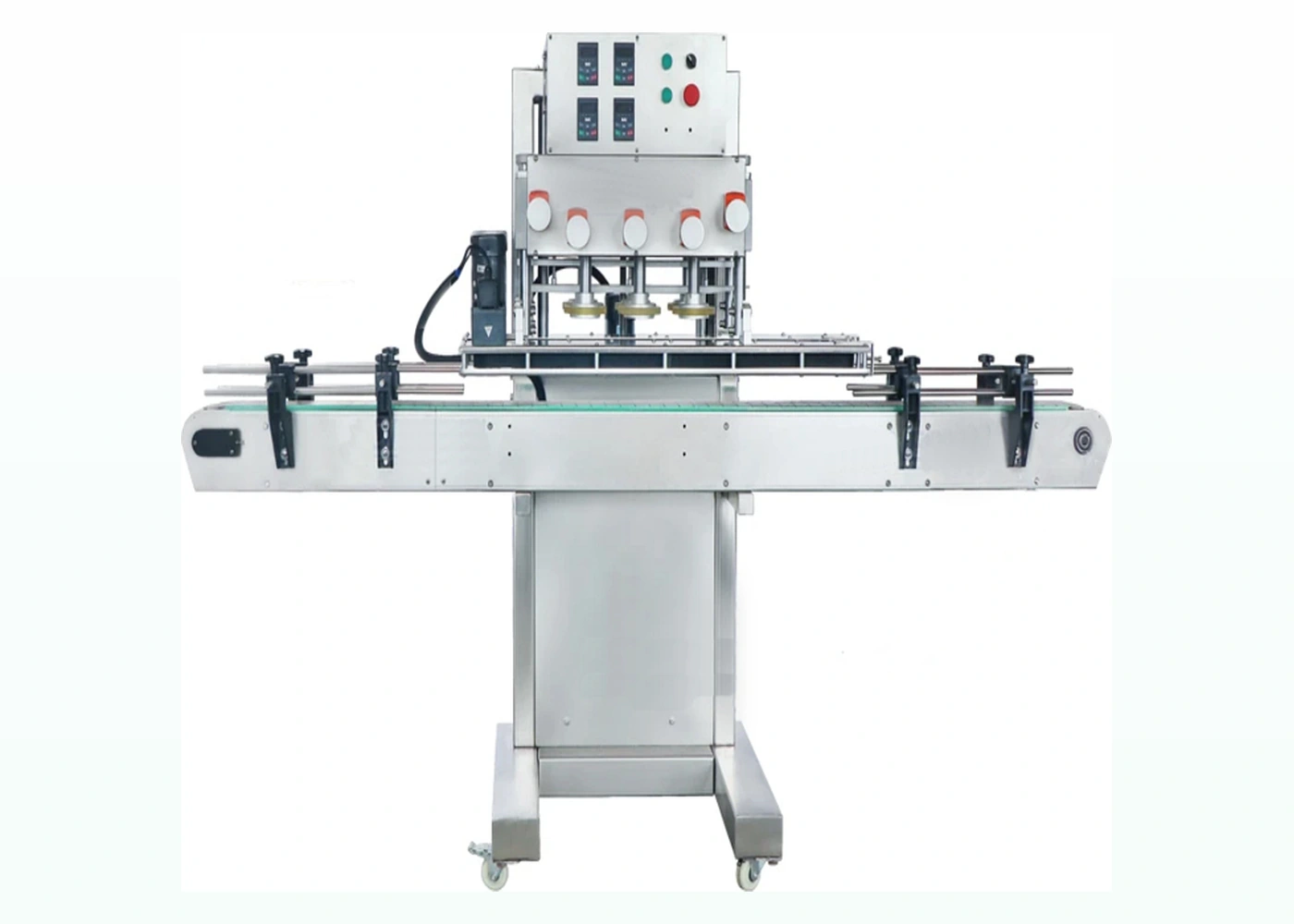
Automatic cap tightening machines are used when a production line needs consistent closure application without relying on manual tightening. They are typically specified around bottle stability, cap presentation, output and torque repeatability.
Selection notes
Automatic cap tightening machines are used when a production line needs consistent closure application without relying on manual tightening. They are typically specified around bottle stability, cap presentation, output and torque repeatability.
Buying detail
Automatic tightening is usually justified when output, repeatability and labour reduction matter. It also helps where hand tightening causes inconsistent torque or operator fatigue.
The machine must control the bottle while the cap is applied. Tall, light or unstable bottles may need guides, side belts or clamps to maintain position.
Automatic cap tightening often requires a cap feeder and suitable conveyor layout. The capper should be specified as part of the line rather than in isolation.
Include cap diameter, closure type, bottle size, target output, available space and whether the capper needs to connect to filling or labelling equipment.
Related routes
Use this route to compare another part of the screw capping project and strengthen your enquiry brief.
Use this route to compare another part of the screw capping project and strengthen your enquiry brief.
Use this route to compare another part of the screw capping project and strengthen your enquiry brief.
Use this route to compare another part of the screw capping project and strengthen your enquiry brief.
Use this route to compare another part of the screw capping project and strengthen your enquiry brief.
Use this route to compare another part of the screw capping project and strengthen your enquiry brief.
FAQs
Suitability depends on cap type, bottle stability, target torque, output and whether caps are manually placed or automatically fed. Samples help confirm the correct route.
Send bottle and cap samples or drawings, cap diameter, bottle height and diameter, target output, product type, line layout and any changeover requirements.
Yes. Lancing UK can review the product, pack, closure and output requirement first, then help shortlist a practical screw capping route.