01
Layout and bottle flow
Inline capping depends on controlled infeed spacing, stable guides and smooth transfer. A machine that looks fast in isolation can underperform if bottle spacing or upstream filling is inconsistent.
Inline capping route
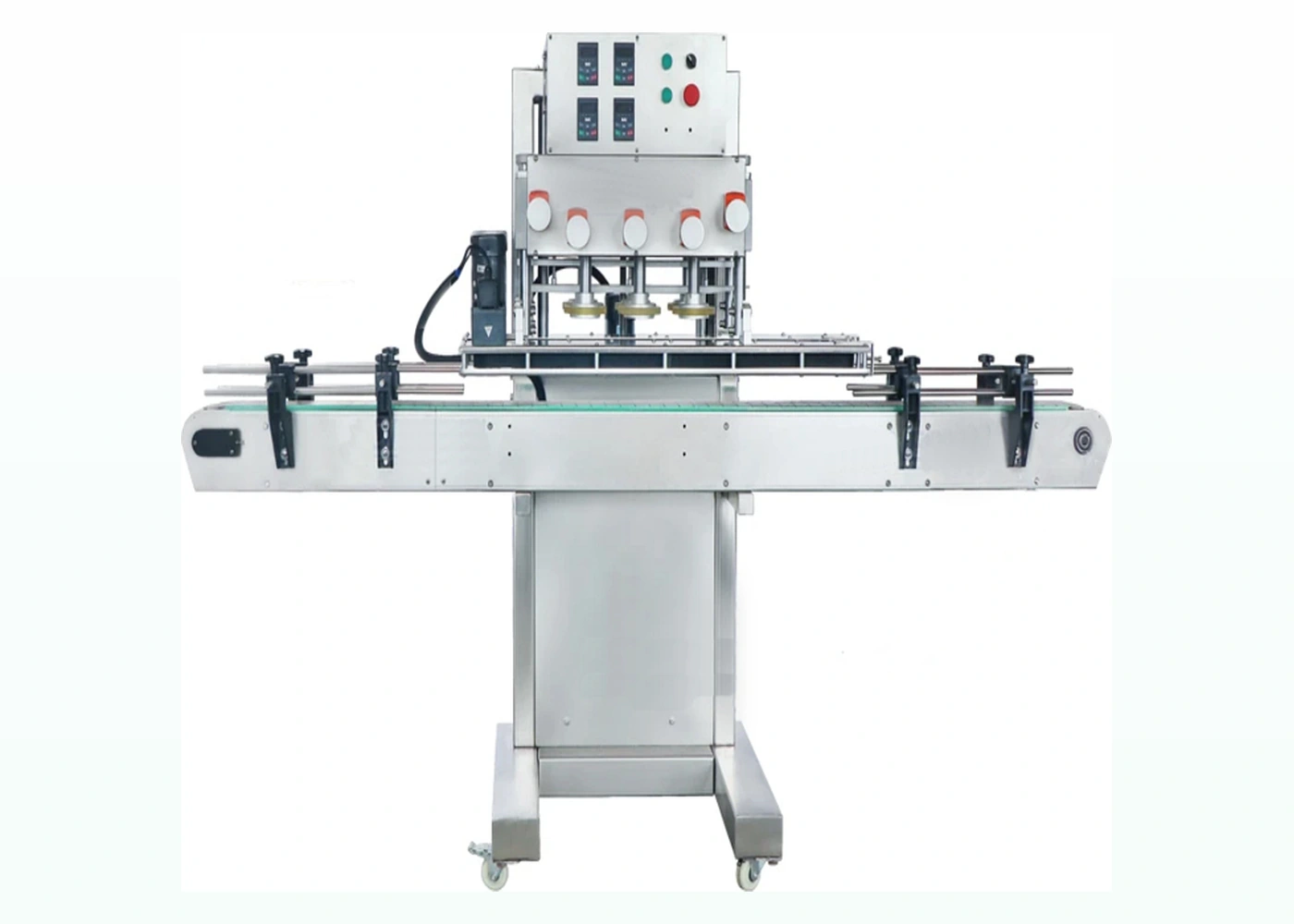
An inline bottle capping machine sits directly in the production flow so filled bottles can be capped before labelling, coding or packing. It is normally chosen when manual bottle handling has become a bottleneck.
Selection notes
An inline bottle capping machine sits directly in the production flow so filled bottles can be capped before labelling, coding or packing. It is normally chosen when manual bottle handling has become a bottleneck.
Buying detail
Inline capping depends on controlled infeed spacing, stable guides and smooth transfer. A machine that looks fast in isolation can underperform if bottle spacing or upstream filling is inconsistent.
Inline systems can use chuck heads, belts or spindles depending on cap type and speed. Pumps, triggers and taller closures may require additional attention to orientation and presentation.
During installation, the capper should be checked at realistic line speed using production bottles, caps and filled-product weight. Operator handover is also important for changeovers.
Include cap diameter, closure type, bottle size, target output, available space and whether the capper needs to connect to filling or labelling equipment.
Related routes
Use this route to compare the next stage of the screw capping project.
Use this route to compare the next stage of the screw capping project.
Use this route to compare the next stage of the screw capping project.
Use this route to compare the next stage of the screw capping project.
Use this route to compare the next stage of the screw capping project.
FAQs
It caps bottles as they move through the line rather than as an isolated bench operation.
Yes. Some compact systems are designed for lower-output inline work where space is limited.
Common causes include unstable bottles, poor cap presentation, inconsistent bottle spacing and unsuitable cap torque settings.