01
Application versus tightening
Some projects need only consistent tightening after an operator places the cap. Others need automated cap presentation and application as part of a continuous line.
Cap application
A bottle cap applicator applies and tightens closures onto bottles. In screw capping projects, the key questions are how the cap is presented, how it starts on the thread and how consistently it is tightened.
Selection notes
A bottle cap applicator applies and tightens closures onto bottles. In screw capping projects, the key questions are how the cap is presented, how it starts on the thread and how consistently it is tightened.
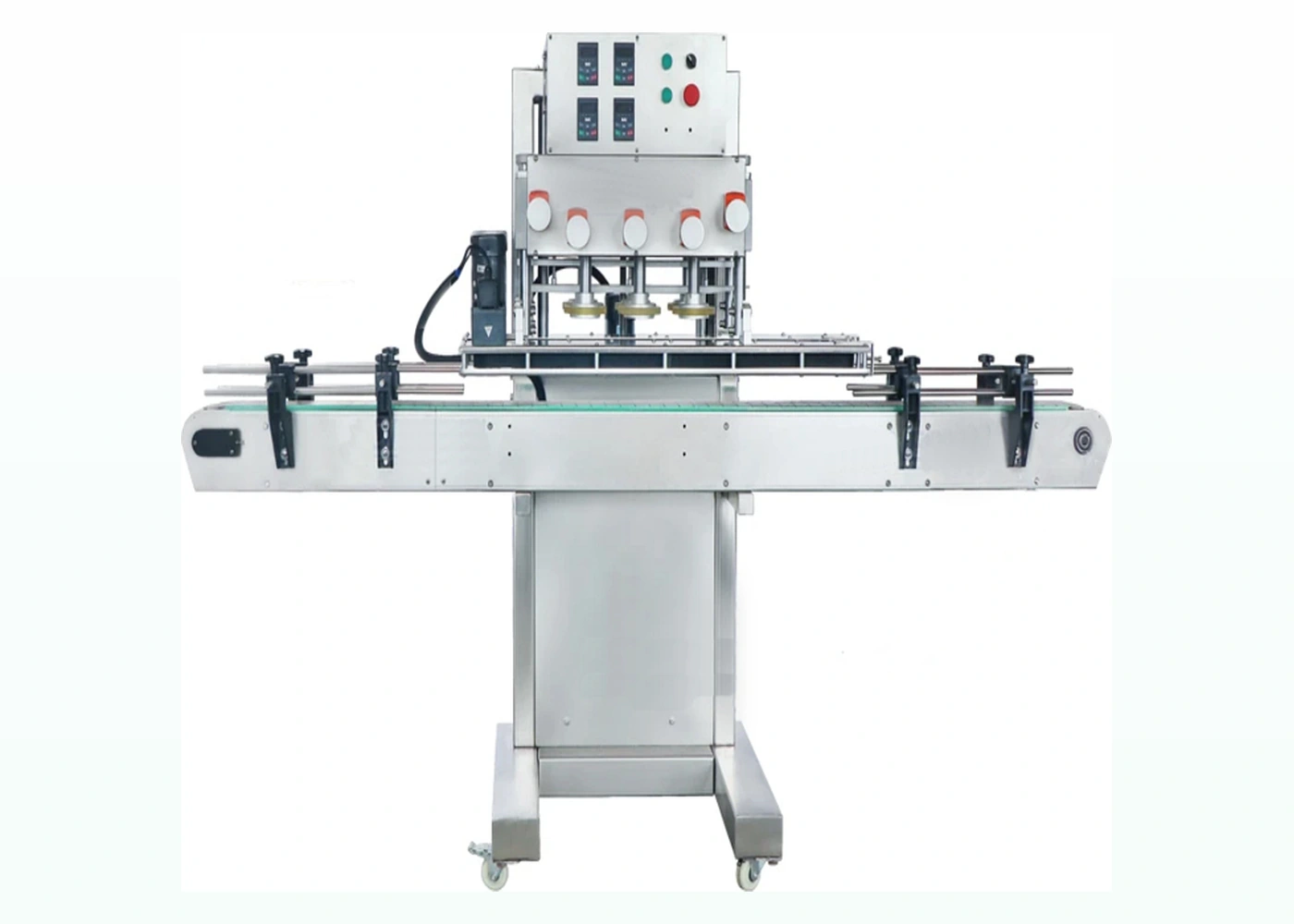
Buying detail
Some projects need only consistent tightening after an operator places the cap. Others need automated cap presentation and application as part of a continuous line.
A semi automatic cap applicator may be the best first step. Automatic cap application is useful when output or labour savings justify cap feeding and line integration.
The cap applicator should be reviewed against real bottle and cap samples, especially for pumps, triggers or shaped bottles.
Include cap diameter, closure type, bottle size, target output, available space and whether the capper needs to connect to filling or labelling equipment.
Related routes
Use this route to compare the next stage of the screw capping project.
Use this route to compare the next stage of the screw capping project.
Use this route to compare the next stage of the screw capping project.
Use this route to compare the next stage of the screw capping project.
Use this route to compare the next stage of the screw capping project.
FAQs
The terms are often used together. For screw caps, the machine normally applies tightening torque to the closure.
Yes, on many semi automatic and lower-output routes.
Yes, if cap presentation and bottle handling are suitable.