01
Thread engagement
The cap must start correctly before tightening. Cross-threading risk increases when caps or bottles vary, when bottles are unstable or when cap presentation is inconsistent.
Threaded closures
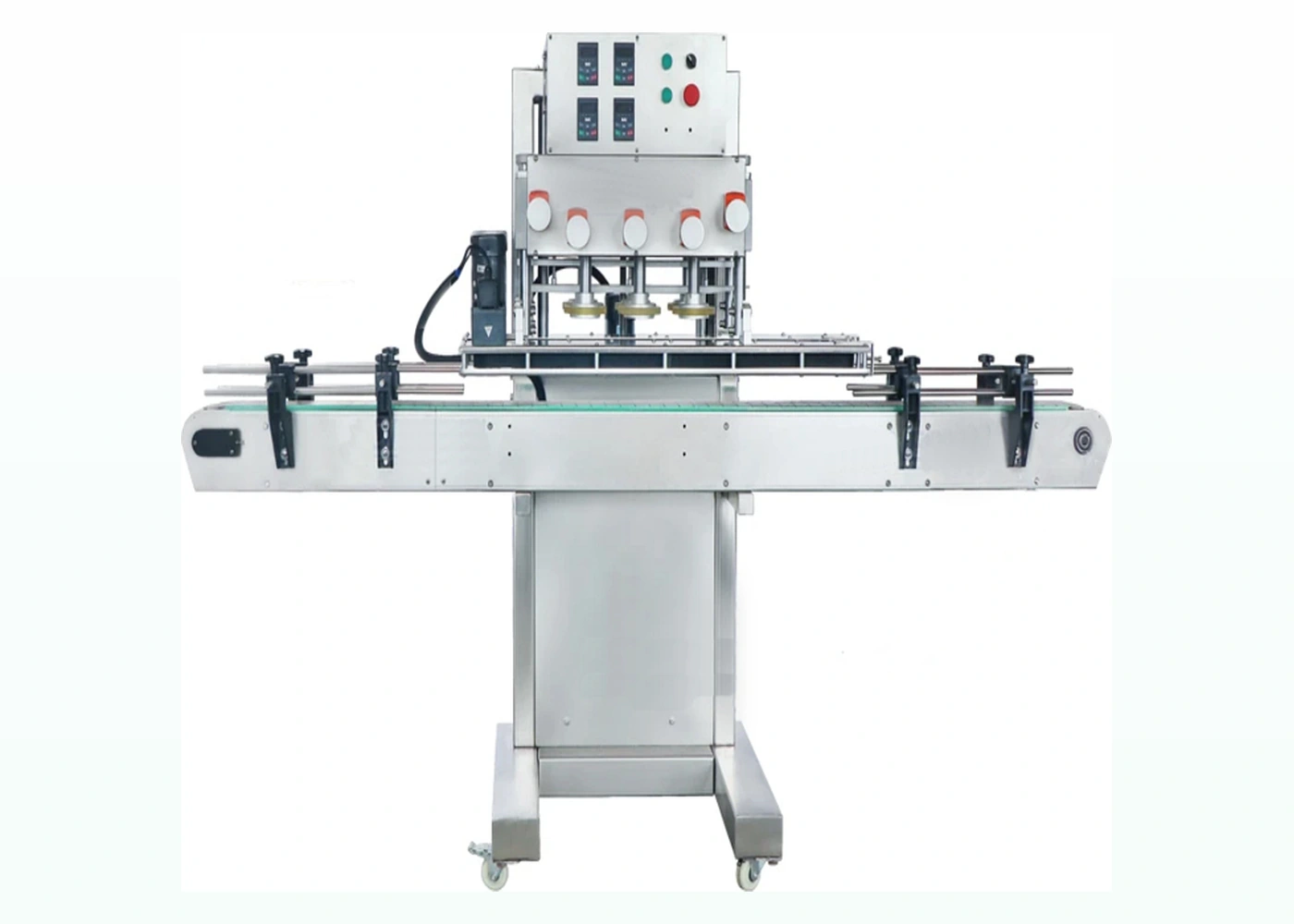
Threaded cap capping machines tighten screw caps onto matching bottle or jar threads. The process looks simple, but performance depends on closure quality, torque, cap start and bottle control.
Selection notes
Threaded cap capping machines tighten screw caps onto matching bottle or jar threads. The process looks simple, but performance depends on closure quality, torque, cap start and bottle control.
Buying detail
The cap must start correctly before tightening. Cross-threading risk increases when caps or bottles vary, when bottles are unstable or when cap presentation is inconsistent.
Threaded caps with liners need enough torque to seal without damaging the liner or making the pack hard to open.
Semi automatic routes are useful for smaller batches. Automatic and spindle routes become more attractive as output and consistency requirements increase.
Include cap diameter, closure type, bottle size, target output, available space and whether the capper needs to connect to filling or labelling equipment.
Related routes
Use this route to compare the next stage of the screw capping project.
Use this route to compare the next stage of the screw capping project.
Use this route to compare the next stage of the screw capping project.
Use this route to compare the next stage of the screw capping project.
Use this route to compare the next stage of the screw capping project.
FAQs
A threaded cap screws onto matching threads on a bottle, jar or container neck.
Misalignment, poor cap start, bottle movement or unsuitable cap presentation can cause cross-threading.
A suitable machine can improve torque consistency, but the achievable result depends on the cap and bottle.