01
Select representative bottles
Include normal variation and the formats most likely to lean, spin or distort.
Flexible bottle handling
Lightweight plastic bottles need enough support to resist capping torque without crushing, spinning or moving off-axis. The correct method is proved with the real filled pack and closure.
Direct answer
Lightweight PET or HDPE bottles can spin, lean, panel or collapse when clamps or side belts press on flexible walls. Filled weight, bottle temperature, shoulder shape, neck support and conveyor acceleration can all change handling. A stable empty sample does not always represent production.
Use the accepted bottle and cap, test the intended fill condition and select guides, body contact, neck support or side belts that maintain alignment without visible damage. Confirm thread engagement and cap height before treating torque as the final result.
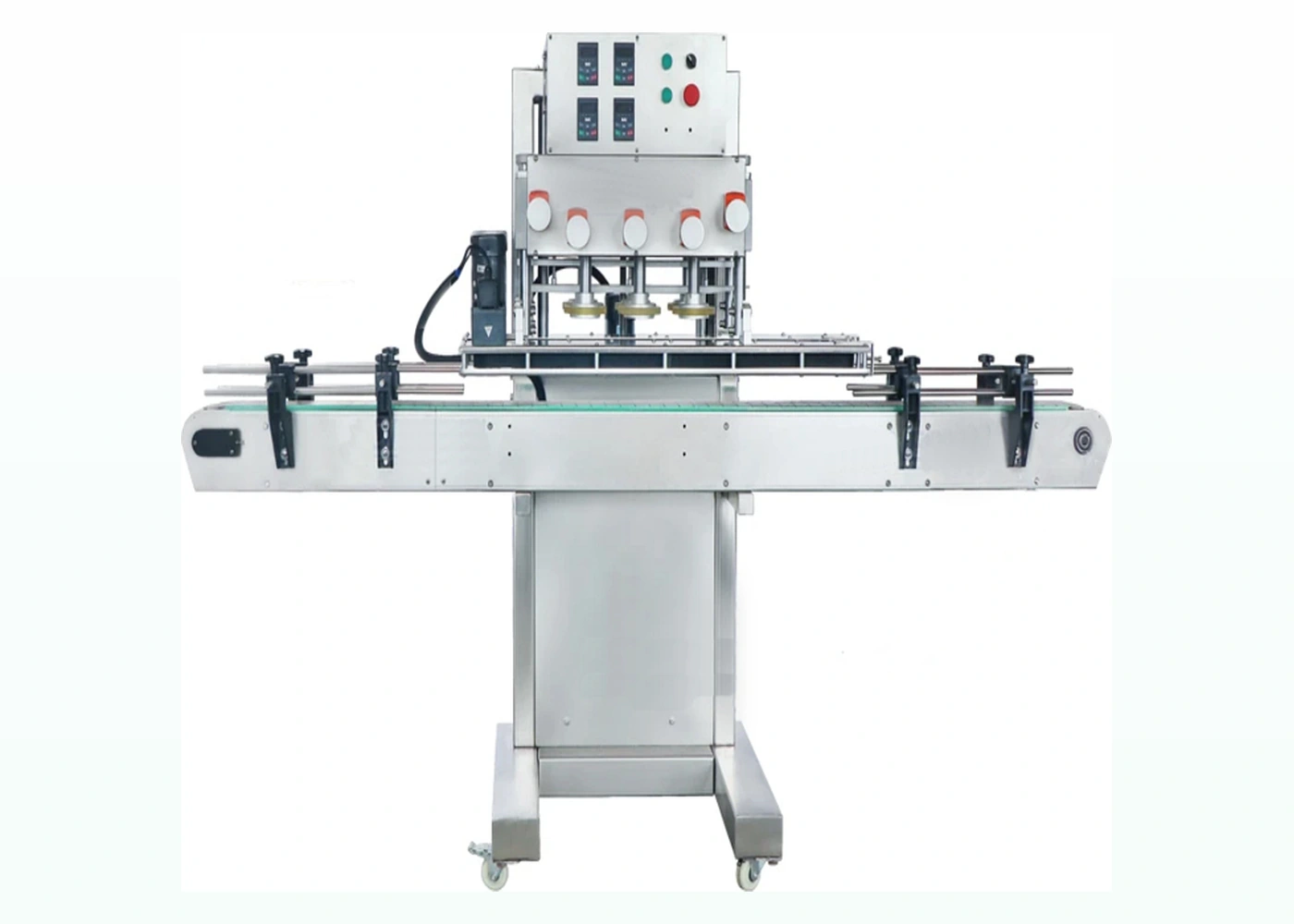
Decision evidence
A flexible pack can make a suitable cap and capping head appear inconsistent when the container is moving or deforming.
| Bottle condition | Capping risk | Validation focus |
|---|---|---|
| Empty or very light | Low inertia and limited body stiffness can allow spinning or tipping. | Test the actual production state or an agreed safe equivalent. |
| Thin flexible panels | Clamps or belts may deform the wall and move the neck off-axis. | Use stronger bottle features or distribute contact over a suitable area. |
| Tall bottle | High centre of gravity can create lean during acceleration and capping. | Check guide height, conveyor transitions and stop/restart behaviour. |
| Warm or recently filled | Wall stiffness and dimensions may differ from a conditioned empty bottle. | Agree representative trial condition with the product and packaging owner. |
| Variable bottle moulding | Neck, body or base variation can change support and cap position. | Include normal component variation and retain failed samples by batch. |
| Decorated surface | Guides or belts may scuff labels, print or the bottle finish. | Approve contact areas and appearance during the timed run. |
Practical method
The pack must remain stable from infeed through capping and outfeed, not only while stationary under the head.
Include normal variation and the formats most likely to lean, spin or distort.
Use the intended fill or a safe agreed equivalent so centre of gravity and body response are realistic.
Use neck, shoulder, body guides, clamps or side belts according to the strongest available bottle features.
Control guide transitions, bottle spacing and acceleration so the pack reaches the capping point aligned.
Check bottle damage, scuffing, cap level, thread engagement and the approved closure-integrity method.
Include line stops, restarts, replenishment and normal accumulation so handling remains stable outside steady flow.
Buyer questions
The best support route depends on the actual bottle, fill condition, cap and capping technology.
They may not provide enough stiffness or friction to resist the applied torque, especially when force is concentrated on flexible panels. Misalignment, high clamps, side-belt pressure or an unstable base can add to the problem. Use representative filled samples to identify the real cause.
Empty bottles can be used for early screening, but they may not represent production stability, centre of gravity or wall response. Final handling and closure acceptance should use the intended filled condition or a safe, agreed equivalent that reproduces the relevant pack behaviour.
Not necessarily. More pressure may stop rotation but deform the bottle, move the neck off-axis or mark the pack. Improve alignment and choose a stronger support point before increasing restraint, then approve the minimum effective setting through a representative run.
Side belts can stabilise continuous inline capping, but their height, pressure and speed must suit the bottle. Incorrect contact can squeeze panels, tilt the neck or scuff the surface. Test steady running, starts, stops and bottle variation before approval.
Neck support is preferable when the body is too flexible or decorated for reliable clamping and the bottle provides a suitable neck ring or shoulder feature. Clearance around the cap, tamper band and tooling must still allow the closure to be applied and inspected correctly.
Continue the decision
Use the most relevant next page to prepare the pack, trial or machine specification.
Choose the support point that prevents spinning without damaging the pack.
Review application routes for common plastic bottle formats.
Record bottle geometry, filled condition and closure dimensions for the trial.
Lancing can assess guides, clamps, neck support, side belts and the closure checks needed to approve the format.